African Mask Project · Craftwhack
As a teenager, I had a brief obsession with African masks. I've always loved faces in art, and I suppose the graphic dazzler of African masks appealed to me equally a stylization of regular faces. I couldn't fifty-fifty believe my luck when my family visited the National Museum of African Art in D.C. I was in heaven as I saw all of these masks in existent life that I had only previously pored over in books.
In fact, African masks have heavily influenced modern western and European artists. Take a look at cubism, fauvism and expressionism and you volition see endless examples of African-influenced work.
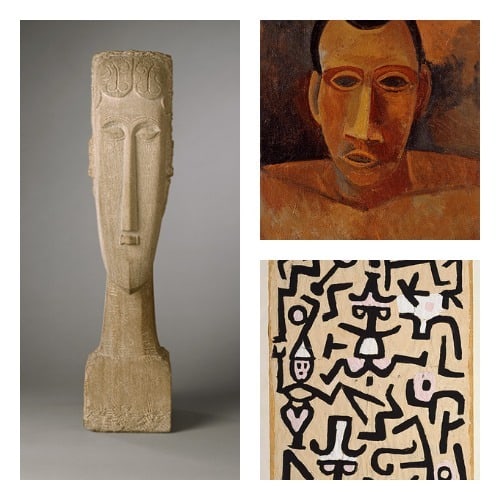 left to correct, clockwise: Amedeo Modigliani –Adult female's Caput, 1912, Pablo Picasso –Bust of a Man, 1908, Paul Klee –Comedians' Handbill, 1938. Photo credit: Metropolitan Museum of Fine art
Every bit a freshman in higher, I carved an African-type mask out of plaster in my 3-D class, and information technology sort of sucked, only it was so much fun. I came up with an easier way for kids to make African-style masks. It all starts with a plastic craft store mask…..
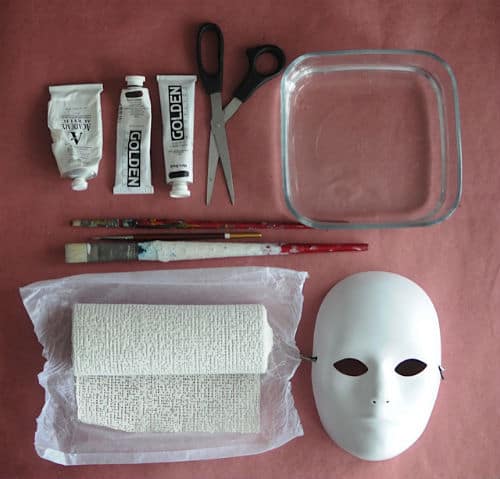
Materials:
- plastic craft-shop mask
- plaster strips
- gesso
- acrylic paints and brushes
- bowl of warm water
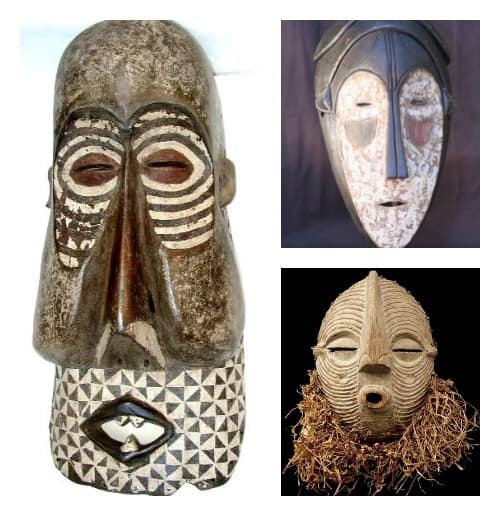
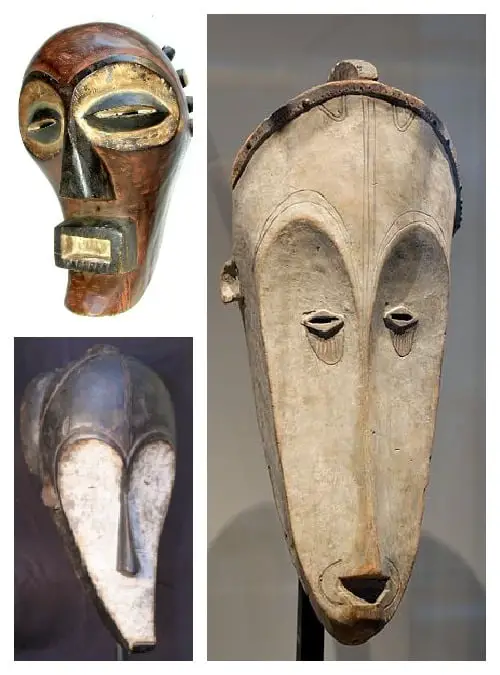
You can tell your kids that masks take been used in African tribal ceremonies and they represent the spirits of their ancestors. They have many symbolic meanings, and are made of many different types of materials, such equally leather, wood, fabric, and metal. If you desire to cheque out an excellent page on examples of masks from specific tribes, check out High-sounding Factory.
Directions:
1. Cut your plaster into strips and pieces. We institute that if we cut them into strips about two″ wide, and then cut those in half width-wise, this was the size we used well-nigh. The long strips seem to only get unwieldy and frustrating for kids to manage. 2″x2″ squares are a good size, too. **Cutting more pieces than you lot remember you'll need!**
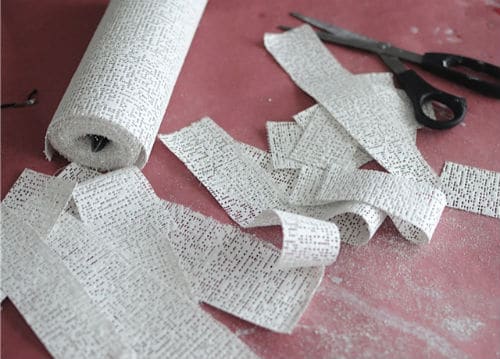
ii. Ane at a time, dip the plaster strips into the water and band them through your fingers to get rid of the backlog water.
3. Lay them over the mask, overlapping them and covering the whole mask with nearly 2 layers. We covered the eyes and oral cavity and olfactory organ holes. As you lay downwardly a new strip, gently rub the edges onto the strip you are overlapping it onto. The more y'all smooth out the plaster strips with your fingers, the fewer of the piffling air hole-bumps will remain later on information technology is dry.
4. If y'all'd like, dispense the plaster strips to course ridges over the optics for stylized, 3-dimensional eyebrows, or square off the tip of the nose- see African mask examples.
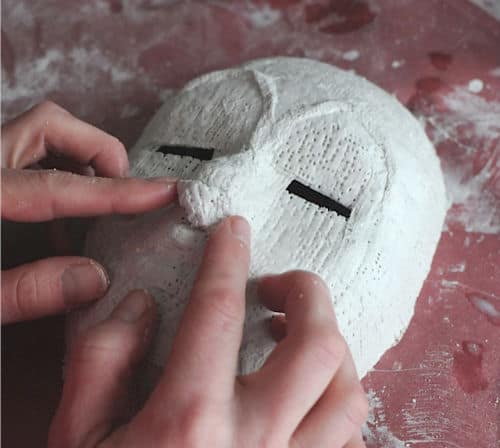
Okay. I fabricated a super depression-tech video tutorial on how to apply plaster textile. (Delight pardon my heavy breathing from my common cold, and the side of the basket in the corner…..)
five. Set information technology aside to dry- (Hint: popular it off of the plastic mask afterwards it's prepare for a little while. In damp weather this will accept longer- up to a day or so. We cheated and popped ours into the microwave for a minute at a time until information technology was dry. If the mask feels common cold to the bear upon, this means information technology still has moisture in information technology. Information technology must exist fully dry to motion on to the next step! If you wish, you can trim the edges of the mask with scissors to fifty-fifty it up.
Edited to add: Don't pour your plastery h2o downward the bleed! Permit it settle, pour excess h2o off the top, and and so dump the plaster bits in the trash. Cheers to Rina for her comment below. I love yous, fine art teachers with years of experience!
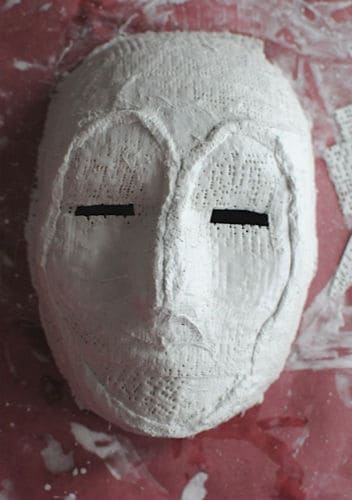
six. Paint two coats of gesso over the mask, letting information technology dry out completely in between coats.
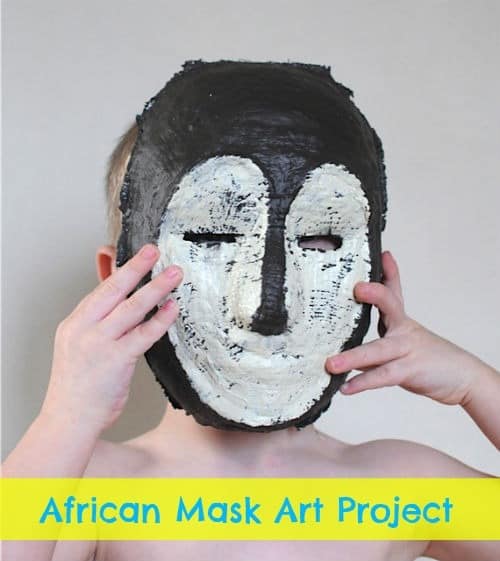
vii. Paint a base brownish color over the mask, (we used Burnt Umber mixed with the teeniest dab of Parchment color (off-white)), then when information technology'southward completely dry, dry-paint a cream color (Nosotros used the Parchment colour again, only you tin mix white with a tiny dab of the dark-brown) in the middle area of the mask. Dry-painting is my completely made-up term for when yous don't mix the paint with water, and you employ a smaller castor to castor on the paint, and then it doesn't sink into the holes of the mask.
Option 2: Paint the whole mask brown; let information technology dry, then paint geometric designs over information technology with the white/cream pigment.
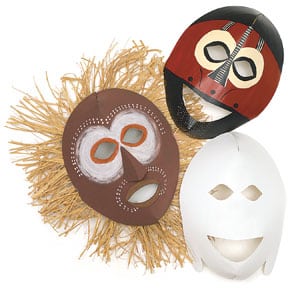
Don't want to become all plastery? Try these pre-made masks from Dick Blick. Y'all simply fold and staple them, then decorate them nonetheless you'd like.
Inspiration!
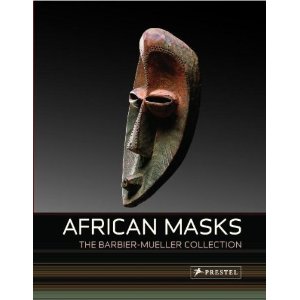
Click on either book to view on Amazon.

Check out my post on African children's books here.
mutchlerstanothom.blogspot.com
Source: https://craftwhack.com/african-mask-project/
0 Response to "African Mask Project · Craftwhack"
Post a Comment